At the DSBN, we believe every student should feel safe, valued, and connected at school.
When problems arise, we respond in ways that:
- Build relationships
- Teach skills
- Repair harm
- Keep students connected to learning
Our approach brings together progressive discipline and restorative practices to support student well-being and accountability.
What is Progressive Discipline?
Progressive discipline is a fair and consistent way schools respond to student behaviour.
It recognizes that responses exist along a continuum and are chosen based on the situation and the needs of the student.
School staff focus on:
- Understanding what happened
- Considering student needs and circumstances
- Including student voice
- Choosing responses that help students learn and grow
Ontario’s Ministry of Education provides guidance for this work through PPM 145. This includes:
- Supporting students
- Creating plans to protect students who have been harmed
- Outlining steps families can take if they have concerns about the support their child receives
For more information, see Supporting bias-free progressive discipline in schools. This approach works alongside restorative practices to help students take responsibility, repair harm, and learn from their actions.
What are Restorative Practices?
Restorative practices are grounded in Indigenous ways of knowing, including First Nations communities in Canada and the United States, and Māori in New Zealand, and teach us that harm affects people, relationships, and community. Repairing harm means rebuilding trust and helping everyone feel safe again. Circles – where people sit together without barriers and everyone has a chance to speak and be heard – are an important part of this work.
Today, schools use restorative practices to build strong relationships and respond to harm in meaningful ways, while recognizing that people may experience harm in different ways. Identity, lived experiences, and bias can shape how harm is felt and understood.
When harm happens, restorative practices help students:
- Understand the impact of their actions
- Take responsibility
- Make things right
- Rebuild trust
A key part of this work is guided conversation. Staff may ask questions such as:
- What happened?
- What were you thinking or feeling at the time?
- Who has been affected and how?
- What do you need to move forward?
- What needs to happen to make things right?
These questions help make sure all voices are heard, especially from those who have been impacted by the harm.
What This Looks Like in Schools
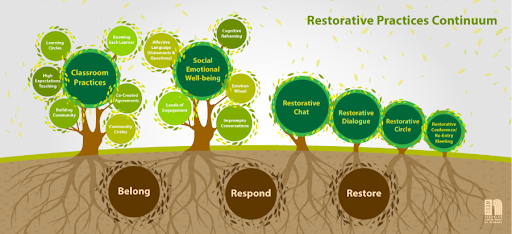
“Strong relationships and a sense of belonging help prevent harm and guide how we respond.”
In DSBN schools, the focus is on building strong relationships and a sense of belonging each day. This helps prevent harm and supports how we respond when it happens.
You may see this through:
- Classroom community-building activities such as learning circles
- Students having voice and choice in their learning and classroom routines
- Staff creating welcoming, inclusive classrooms where all students feel seen and valued
- Learning that reflects different cultures, identities, and perspectives
- Opportunities for students to share their experiences, ideas, and strengths
- School-wide activities that build connection and community
- Staff supporting students to problem-solve and reflect
- Social emotional learning programs
- Restorative conversations after conflict
When More Structured Support is Needed
In some situations where harm has occurred, schools may need to use formal responses, such as suspension or expulsion, as required by the Education Act.
Even in these situations, schools continue to support all students involved, with a focus on safety and well-being by:
- Staff creating welcoming, inclusive classrooms where all students feel seen and valued
- Learning that reflects different cultures, identities, and perspectives
- Classroom community-building activities such as learning circles
- Students having voice and choice in their learning and classroom routines
- Opportunities for students to share their experiences, ideas, and strengths
- School-wide activities that build connection and community
- Staff supporting students to problem-solve and reflect
- Social emotional learning programs
- Restorative conversations after conflict
Schools may also use more structured restorative processes to support students, repair harm, and plan for a safe return to learning.
These processes, outlined below, are carefully planned, led by trained staff and used when appropriate.
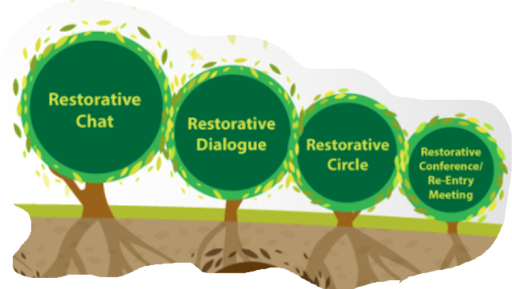
Restorative Chats and Dialogues
Guided conversations between students, supported by staff, to:
- Share perspectives
- Understand impact
- Identify ways to repair harm
Restorative Circles and Conferences
Structured meetings that may include students, families, staff, and others affected.
Participants:
- Share their perspectives
- Work together to make a plan to repair harm and rebuild trust
Re-Entry Meetings
Meetings to support a student returning after suspension, focused on:
- A safe and positive return
- Rebuilding relationships
- Identifying supports for success
Common Questions About Restorative Practices
What happens when restorative practices are being considered?
School staff first focus on:
- Making sure everyone is safe
- Understanding what happened
- Deciding what supports or responses are needed
If restorative practices are being considered, school staff will connect with families to:
- Explain the process
- Share who will be involved
- Outline next steps
- Families will have a chance to ask questions before any restorative process takes place.
Do restorative practices replace consequences?
No. Restorative practices do not replace consequences.
They focus on learning and repair, while consequences address the behaviour.
This approach helps students learn from their actions and reduces the chance of harm happening again.
What if my child was harmed?
Students who have been harmed:
- Are given space to share their experience
- Are supported in saying what they need to feel safe and move forward
- Are never required to participate
Is participation required?
No. Participation is voluntary and students are not required to meet directly with other students if they are not comfortable.
Restorative processes are:
- Voluntary – students are not required to participate
- Flexible – students can choose not to take part or can stop at any time
- Carefully planned – staff prepare students in advance
- Guided by trained staff
- Used when appropriate
What if a student chooses not to participate?
The school will continue to:
- Ensure safety
- Apply appropriate progressive discipline responses
- Provide support in other ways
What is the role of parents and families?
Families play an important role. You can support your child by:
- Talking with your child about what happened and how it affected others
- Encouraging reflection and responsibility
- Reaching out to the school with questions or concerns
Learn More
For more information, please visit: